Path Planning for Robotic Hypertrophic Scar Laser Surgery
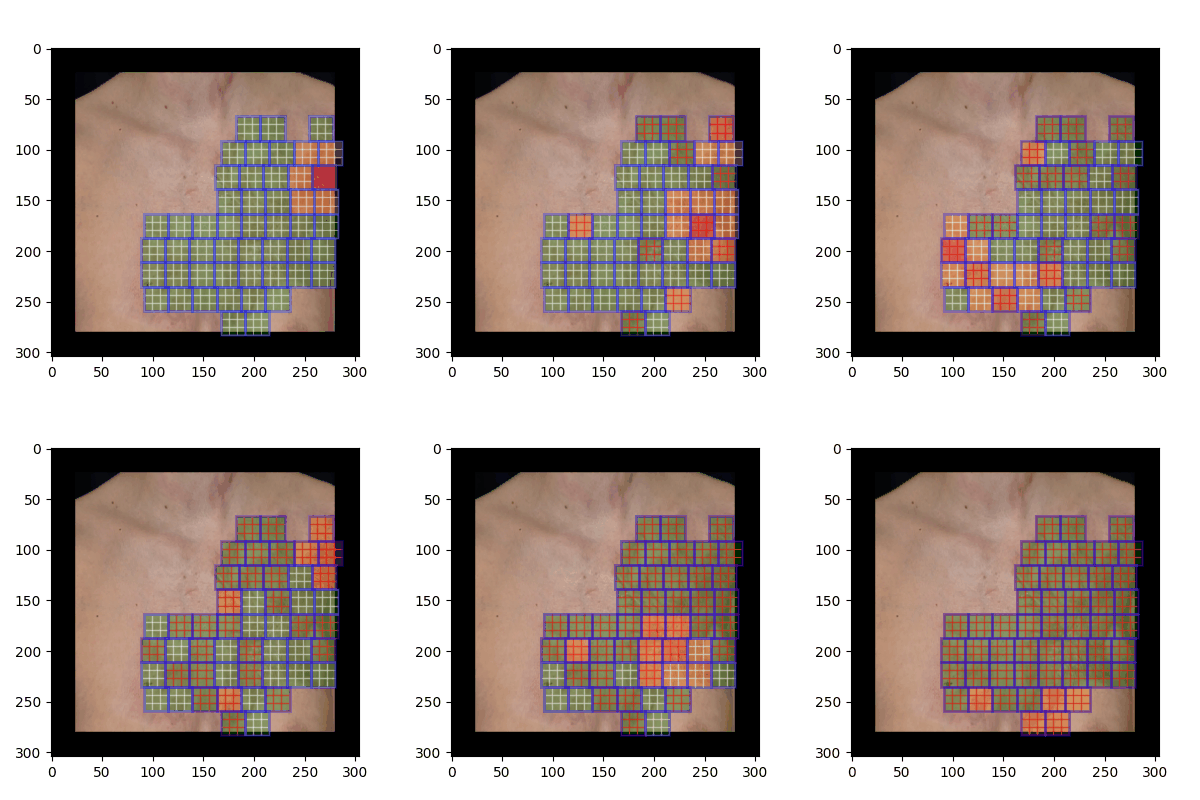
GIF Representation of Greedy
Algorithm Path Planning
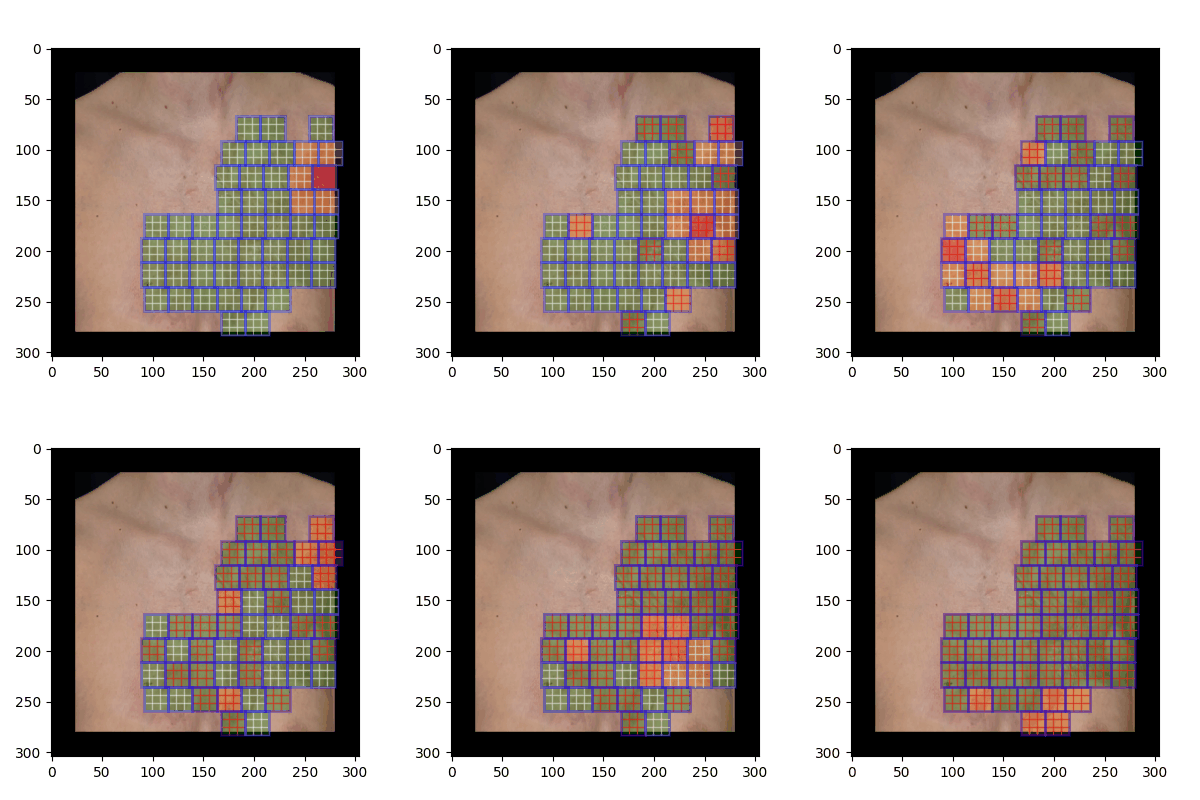
GIF Representation of Reinforcement Learning Algorithm Path Planning
Project Overview
Laser surgical intervention is an effective treatment for hypertrophic burn scars. It works by creating controlled micro-injuries that stimulate tissue remodeling which improves scar flexibility and appearance. This in turn restores a patient's range of motion and improves the patient's long-term psychological health. Because these scars vary widely in shape, thickness, and texture, each treatment must be tailored to the individual. Although laser therapy is clinically valuable, the lengthy procedure demands specialized training, careful judgment, and expensive equipment; each limits access to care. A robotic system that creates optimized treatment paths while minimizing unnecessary laser exposure would automate the procedure, allowing a wider range of clinicians to perform it, expanding its availability to burn patients.
This goal of this project is to design an autonomous robotic system capable of safely performing these procedures on hypertrophic scars, which requires developing code that accurately classifies scar tissue and generates precise, safe laser paths within the scar area. Prior work in robotic tattooing and tattoo removal shows that reliable skin perception and point-based, heat-conscious path planning are feasible. Applying these ideas to scar treatment introduces new challenges due to the heterogeneity and thermal sensitivity of scar tissue. This project aims to address these challenges by combining robust scar segmentation with temperature-aware path planning, laying the groundwork for safe and effective robotic laser scar therapy in clinical settings.
Project Summary
This project utilized a fine-tuned U-Net to accurately identify scar regions, despite limited scar training data. Once the segmentation was accurate enough to identify the scar region, it was post-processed through Gaussian blur and square tiling. Each square represents a single fire of a laser array typically used in these surgeries. Then, using mathematical heat modeling, we created a model allowing us to predict how the heat will dissipate through the hypertrophic scar into the free flowing air. While targeted damage is intentional and encourages tissue remodeling, caution must be taken to avoid excessive tissue damage, which interferes in the healing process. Thus, heat modeling is a key step towards path planning.
This post-processing and tiling strategy, coupled with both greedy and reinforcement learning algorithms, successfully generates safe and effective treatment paths in a simulated surgical setting. While the greedy algorithm currently outperforms tabular Q-Learning in efficiency and safety, the reinforcement learning approach has potential to perform better in more complex and less structured surgical scenarios, and could be more accurate with a Deep Q-Network approach. Although future work is required to address data limitations, improve learning-based generalization, and validate the system on a UR5e, this project establishes a strong foundation for future research in autonomous laser scar therapy and illustrates how robot learning can meaningfully contribute to safer, accessible care.
For more detailed information on the problem, methodology, code, and outcomes, read the full report below, formatted as an IEEE-style project paper.